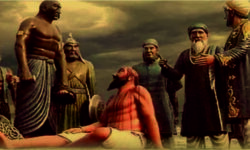






A general of the Mughal army, Aasman Khan, abducted a young daughter of a Brahmin from Kasur. The Brahmin approached the Khalsa Darbar with his plea. The Khalsa gathered at Sri Akal Takht Sahib and resolved to free the Brahmin’s daughter from the Mughals. They went into the Mughal camp and brought the girl back safely, restoring her honor and returning her to her father.
This was a time when Mughal invaders not only looted immense wealth from India but also captured beautiful women and young people, taking them away as prisoners and selling them like animals in the markets of Ghazni. The conscience of many people had become so weakened that no one dared to stand against such tyranny. Everyone was concerned only with saving their own life.
On the other hand, it is astonishing to witness the moral character of the Khalsa, who did not hold their own lives dear. Without any selfish motive, they risked their lives to protect the honor and dignity of others, standing up against oppression with their heads in their palms.
What was that unseen power within the Khalsa that enabled them to free thousands of captive women from Ahmad Shah Abdali? These women had no blood relation to them. Then what was the reason behind such sacrifice? This question disturbed Abdali deeply.
He attacked the Harmandir Sahib, blowing up its structure with gunpowder and filling the sacred sarovar with filth, because he believed that the Amrit Sarovar possessed divine power, and that by partaking of its water, the Singhs became invincible. Yet, the spirit of selfless service and compassion within the Khalsa remained as strong as ever.