





Because I do not have to worship and appease many gods and goddesses or seek the help of numerous deities to fulfill my needs. Instead, I rely on one God, who is omnipresent and always with me, wherever I may be.
My God has no equal and fears none. By praying to Him, I seek protection from the One who is Himself fearless—and who removes all my fears. He is kind and merciful, forgiving my sins when I sincerely pray for forgiveness. He is all-powerful and ever-present; because of His constant presence in my life, my enemies dare not harm me.
I have no complex rituals to perform in order to seek His help. I simply meditate on His divine qualities, and He manifests in those very virtues. I can meditate on Him anywhere, anytime, and on any occasion. Seeking His help is so simple and direct—it’s one of the many reasons I am drawn to be a Sikh.
Because I do not have to go door to door in search of guidance or spiritual wisdom. All that I need is contained in one Holy Scripture—the Sri Guru Granth Sahib. It is the fountainhead of eternal wisdom, through which I visualize my God. It provides me with a clear and truthful perspective of this world and the hereafter.
It contains the principles for living a happy, meaningful life—a life of joy and beauty. It teaches me not to fear even the most dreaded of realities: death. It educates me on every aspect of life: personal and impersonal, social and individual, worldly and spiritual. With its help, I soar to immeasurable heights and delve deep into the depths of truth to find priceless gems of wisdom.
This Scripture uplifts my soul, touches the deepest strings of my being, and carries me beyond the limits of human intellect. It distinguishes right from wrong and guides me unfailingly. Its transcendent beauty, sublime music, and spiritual nourishment connect me with humanity, the universe, and even God Himself. Its constant enlightenment keeps me firmly rooted in Sikhism.
Because I am never alone. My Guru, though invisible to the physical eye, is always with me. He is a mighty warrior, unparalleled in bravery—a saviour of the innocent, kind, noble, and compassionate. Whenever I am in distress, overwhelmed, or in danger, I meditate upon His dynamic personality—and He stands by my side. How can I not be a Sikh?
Guru Gobind Singh Ji, the tenth Master, gave me three divine commands:
1. Service (Seva) – especially of the poor and humble
2. Simran (Meditation) – on the qualities of the Divine
3. Sacrifice (Tyag) – for truth, justice, and righteousness
These are the pinnacles of human excellence, and in my efforts to live up to them, I remain a Sikh.
Because the Sikhs are a martial people, who would rather die a heroic death than live a life of cowardice. They rejoice in sacrificing their lives for noble causes. They accept death as God’s sweet will and never grumble in the face of it. Their history is filled with martyrs whose stories are remembered daily in their prayers. This remembrance inspires them and enlivens their spirit of sacrifice.
To a Sikh, dying a coward is the greatest sin; dying in battle is the highest honour. They do not retreat from the enemy. It is this spirit of valour that has earned the Sikh community global respect. This martial inspiration is one of the many reasons why I choose to be a Sikh.
Because of the sacred nectar – Amrit – that my Guru gave me, I am a Sikh. It fills me with the power of Naam, the strength of steel, the coolness of water, and the sweetness of honey. It transforms me into a higher version of myself. I begin to reflect the spirit of Guru Gobind Singh Ji. With my long hair and flowing beard, I resemble the great spiritual figures of history—Christ, Muhammad, Rama, Krishna, and the Rishis of India.
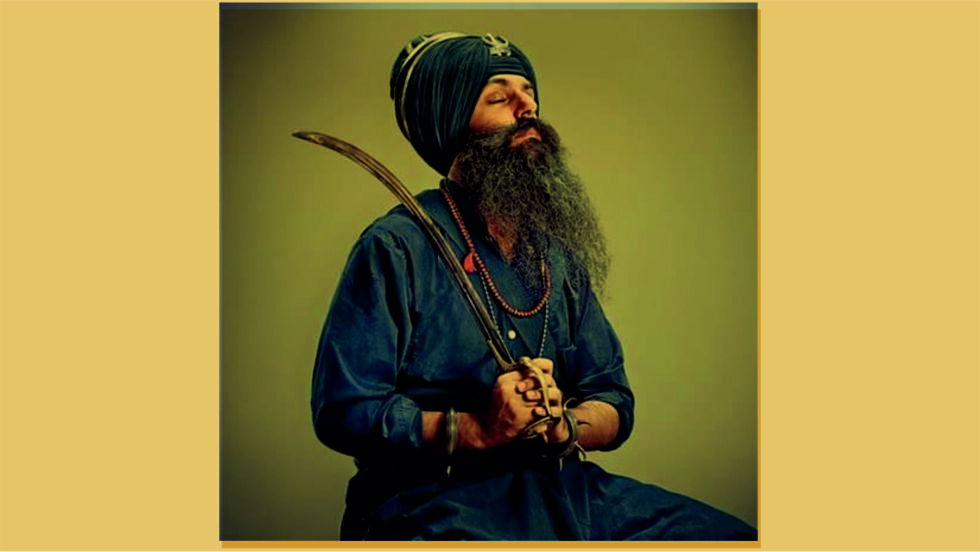
I feel like Shiva, sword in hand, ready to protect the weak and defend righteousness. What a divine transformation, brought about by Amrit—that makes me a Sikh!
Because practising Sikhism is simple and free from meaningless rituals. There are no elaborate ceremonies, fasts, renunciations, or rigid codes. I do not need to blow conch shells, ring bells, appease idols, or undertake long pilgrimages. I keep my hair uncut, as gifted by nature, and cleanse it daily with a comb. I wear a kachhehra (underwear) for modesty and readiness, a kirpan (sword) for self-defence, and a kara (iron bracelet) as a constant reminder of my Guru’s eternal presence.
I eat when hungry, drink when thirsty, wear clothes for dignity, and enjoy life with balance—so long as it does not pollute my mind or harm my body. My guiding principle is a clear conscience in a sound body. This freedom and simplicity of faith is what draws me to be a Sikh.
Because Sikhism is not a faith to be confined to temples or practiced in isolation. It is a way of life. I must live it every day—behind the plough, on the roadside, in workshops, at the office, and on the battlefield. I must be a Sikh at home and abroad, in thought, word, and deed. I must practice Sikh values in all dealings and all walks of life. Sikhism is action, not just preaching. I must live what I believe, be authentic, not deceptive. No showmanship, no hypocrisy—that is my creed. And that is why I am a Sikh.
Because I do not need a priest to redeem my sins. I am my own priest. I can pray directly to God, and He listens. I have full faith in the Sangat—a congregation of fellow devotees. We gather in the presence of the Sri Guru Granth Sahib, sing hymns together, and attain spiritual harmony.
We stand and pray as one—humble, united, seeking guidance, forgiveness, and blessings for all of humanity. In those moments, I feel truly connected to the universe, part of the human brotherhood, bowing before the Divine in humility. What a wondrous prayer! That is why I am a Sikh.
Because Sikhism recognises no caste or creed, no color, country, or race. Its doors are open to all—Black or White, Eastern or Western, Hindu, Muslim, Christian, Jew, or any other. There are no untouchables in Sikhism. Sikhs run Guru-ka-Langars (community kitchens) where everyone eats together as equals, regardless of background.
Even the wealthiest serve in the Langar, cooking meals and washing dishes, shoulder to shoulder with the poorest. All sit in the same Pangat (row) and eat the same food, offered as a gift from the Guru. Common bathing tanks, like those at Amritsar and Goindwal, welcome all without distinction.
In congregational prayer, there are no barriers of religion or nationality. One common Holy Granth, one God, one humanity—that is Sikhism. Its universal brotherhood, equality, and fraternity inspire me to be a Sikh.
Because Sikhism is founded on the Unity of God and the Brotherhood of Man. Love for God and service to humanity are its two central pillars. The soul, trapped in the human body, longs to reunite with its Creator—and love is the bridge that connects them. Service softens the heart, making it receptive to love.
That is why every Sikh rises early before dawn to immerse in the love of the Divine, and then, with sunrise, turns to serve others, all while fulfilling life’s duties with honesty and sincerity.
These are the ideals I aspire to live by—and that is why I am proud to be a Sikh of the Guru.
-By S. Narain Singh, M.A. (Gurpurwasi)